
 Thai
Thai
What Actually Happens During a Tummy Tuck?
A tummy tuck, or abdominoplasty, reshapes and tightens the abdomen by removing loose, excess skin. It’s most commonly chosen by people whose skin has stretched from pregnancy, significant weight loss, or the natural aging process.
Depending on each patient’s needs, the procedure may also include liposuction to remove excess fat around the waist, upper abdomen, and back. This gives the overall silhouette a more natural, sculpted result in a single session.
At MAXi Clinic, every tummy tuck also involves internal muscle repair. The deep abdominal muscles often separate during pregnancy, a condition called diastasis recti, and are sutured back together from the inside. This gives the abdomen not just a flat appearance on the surface, but genuine strength and firmness underneath.
Pain during the hospital stay is managed with a Patient-Controlled Analgesia (PCA) system, which allows patients to administer their own pain relief as needed. This keeps discomfort well under control throughout the initial recovery period.
So Why the Bent Posture?
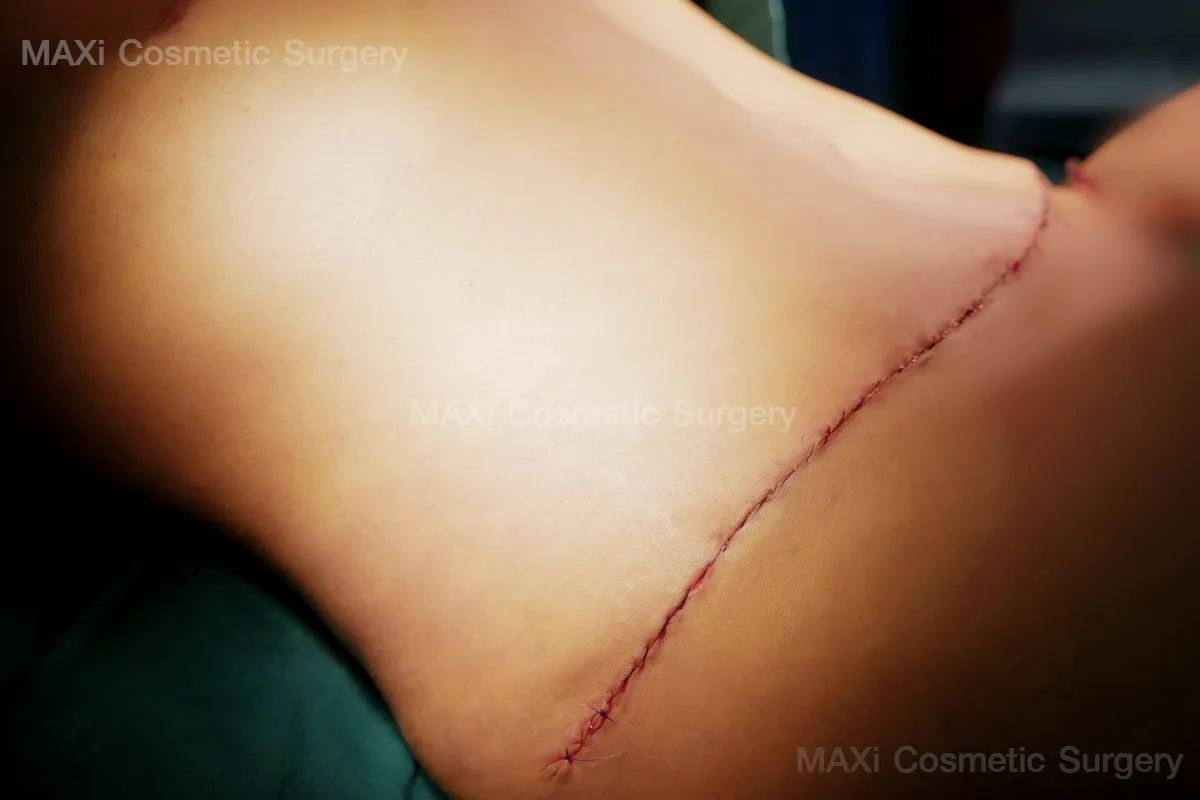
After surgery, the abdominal skin has been pulled taut and sutured in a new position, both on the surface and deep within the muscle layer. Lying completely flat or standing fully upright too soon puts direct tension on this area.
If that tension is too strong, too early, it can lead to:
- Tearing of the internal sutures or the wound itself
- Slower wound healing
- Increased pain with every movement
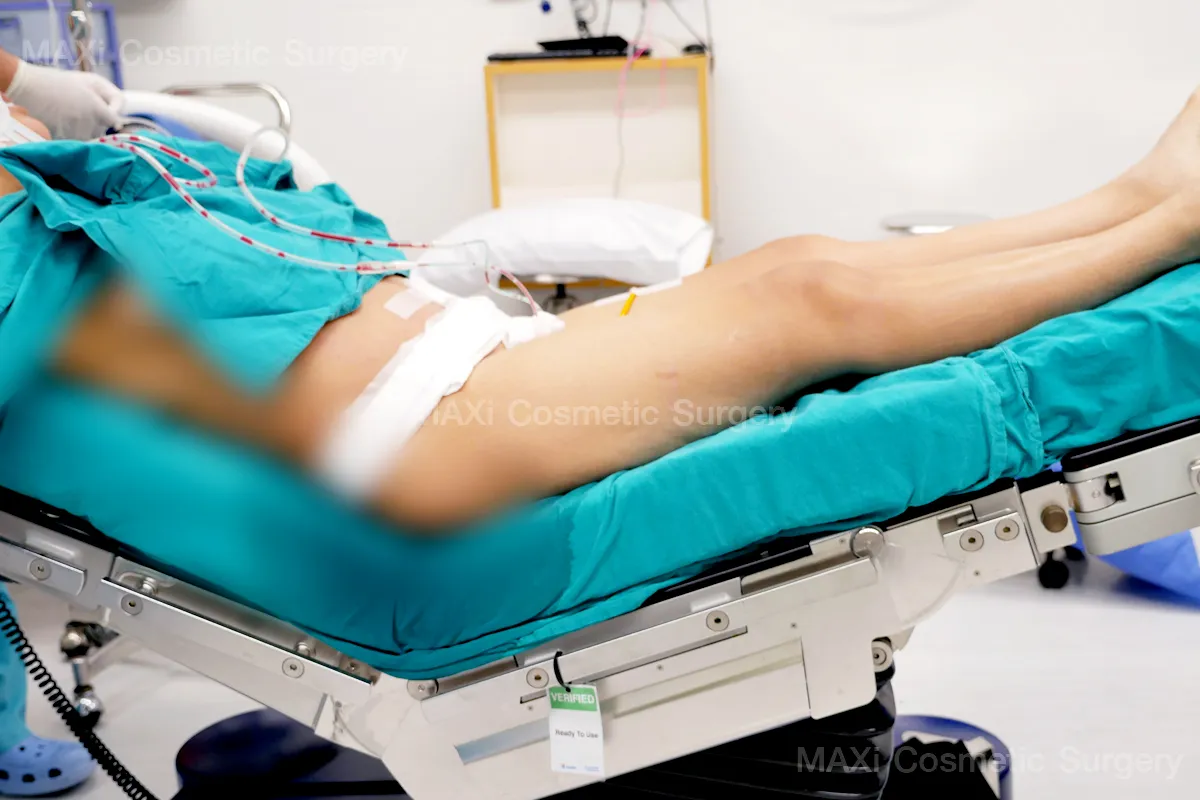
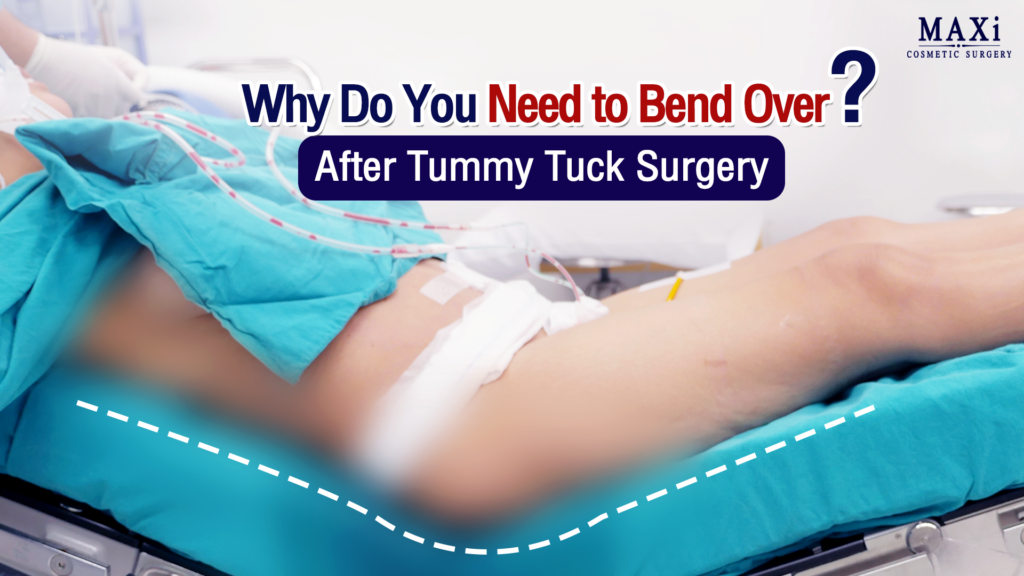
Sleeping and resting with a slight bend, head elevated and knees supported, takes the pull off the abdominal wall and gives the tissue the slack it needs to heal properly.
Why Walking Bent Over Matters Too
It’s not just rest that requires care. How you move in the first week makes a real difference.
For the first seven days after surgery, walking with a slight forward lean, hips and lower back gently flexed, is strongly recommended. Here’s why:
1. It Reduces Tension Across the Incision Line
The abdominal skin has been repositioned and held there under tension. Walking upright too soon creates a strong pulling force directly on the wound. A slight forward lean gives the incision line room to breathe.
2. It Makes Movement Much More Comfortable
In the early days, the abdominal muscles and skin are swollen and highly sensitive. Walking upright during this phase is not just uncomfortable, it can be genuinely painful. Keeping a forward lean lets you move around without fighting against your own healing.
3. It Protects the Internal Repair
Because MAXi’s technique includes suturing the deep abdominal muscles internally, standing and walking fully upright too early puts those internal stitches under strain. A slight forward posture keeps everything in the right position while the repair sets.
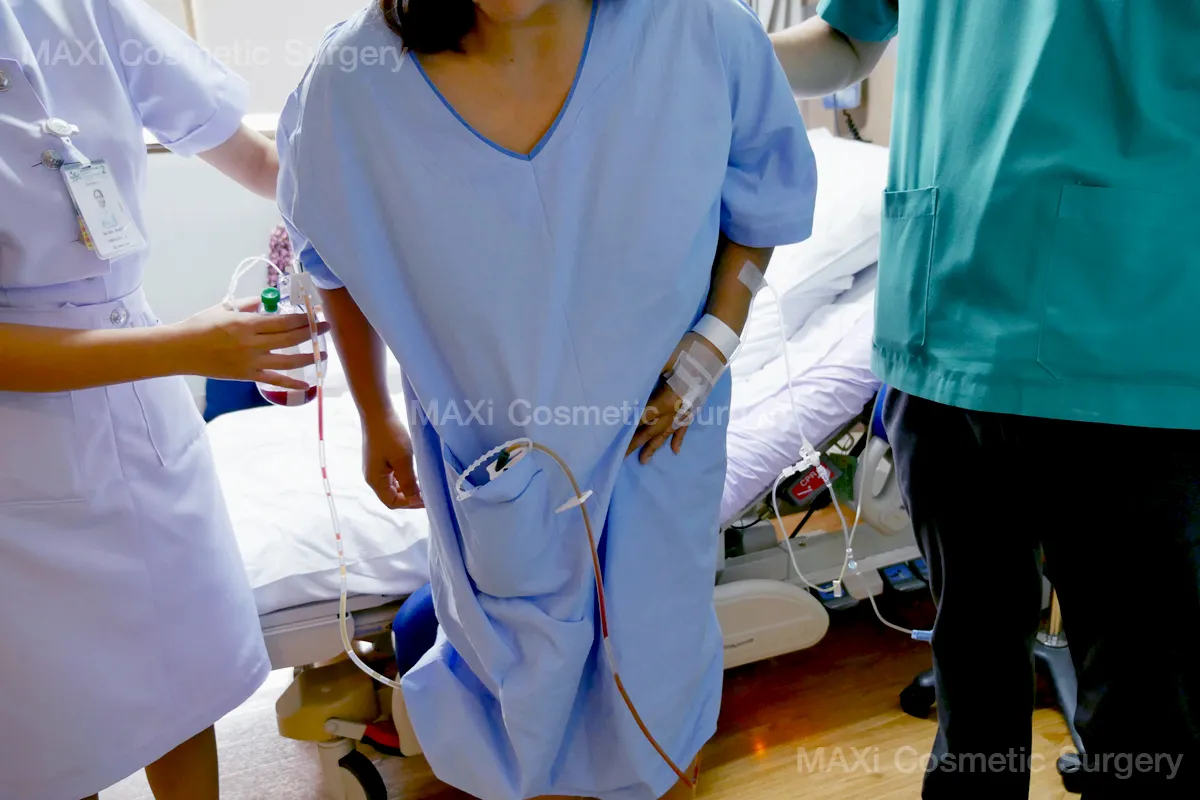
How to Move Safely After Your Tummy Tuck
Sleeping Position
- Rest in a semi-reclined position head of the bed raised to approximately 30–45 degrees, with a pillow placed under your knees to keep them gently bent
- Avoid lying flat, especially in the first week after surgery
Getting Out of Bed
- Roll onto your side first
- Use your arms to push yourself up slowly
- Sit on the edge of the bed with your feet hanging down, keeping a slight forward curve in your lower back
- Stand up gradually do not push yourself upright in one movement
Walking
- Take slow, short steps
- Keep a gentle forward lean do not try to walk fully upright straight away
- Stop and rest if you feel significant pain or tightness
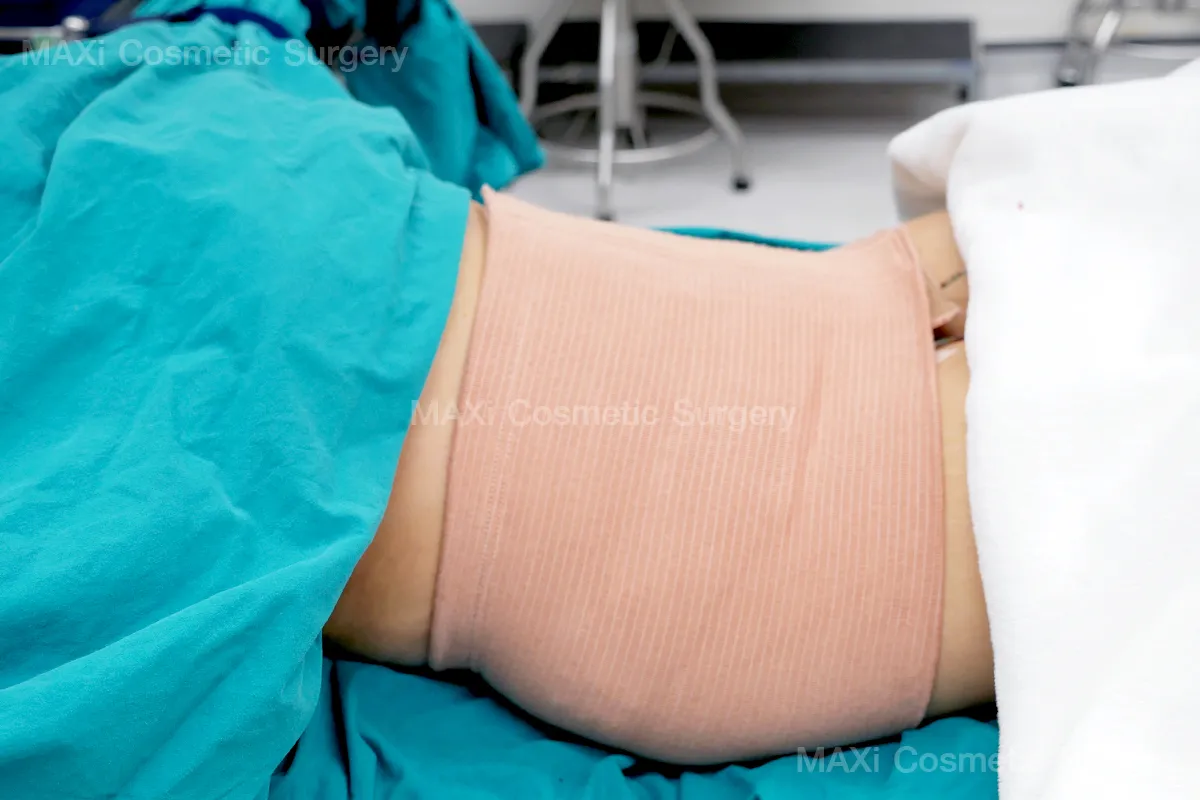
- Wear your abdominal compression garment as advised, as it supports the area and limits unnecessary movement
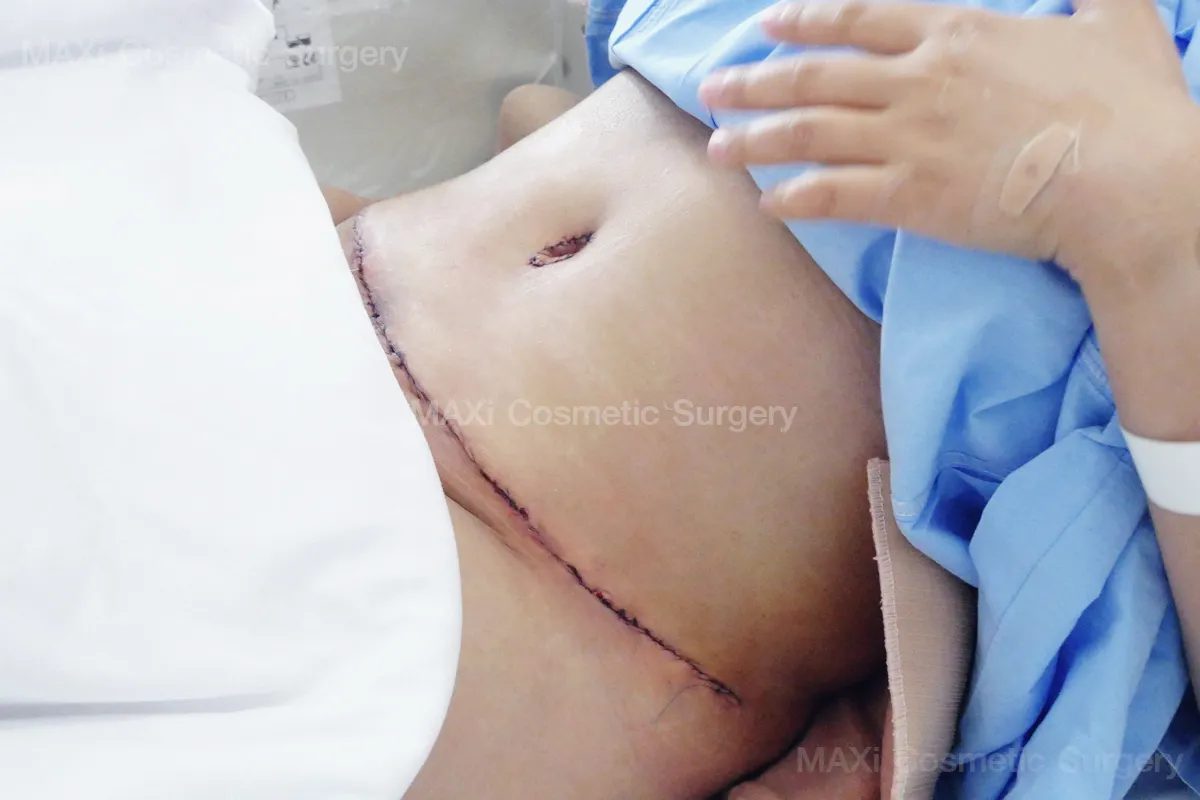
When Can You Stand Up Straight Again?
Recovery progresses differently for everyone, but as a general guide:
- Week 1: Always walk with a forward lean and avoid any fully upright posture
- Week 2: Begin gradually straightening up, only if there is no significant pain or pulling sensation
- Weeks 3–4: By this point, most patients are able to walk and stand fully upright, provided the wound is healing well and there are no complications