

 Thai
Thai
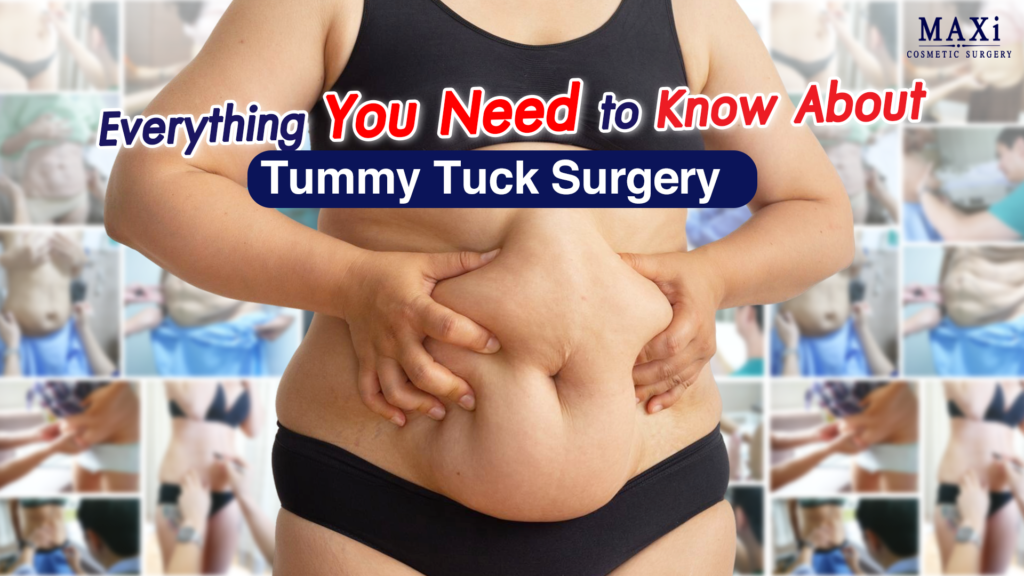
The Stomach Is Often the Last Thing to Change — No Matter How Hard You Try
Many people find that even after months of consistent exercise, careful eating, or significant weight loss, the abdomen simply doesn’t respond the way the rest of the body does. For others, pregnancy has left behind loose skin, a softened midsection, and muscles that no longer hold the way they used to. These are structural changes, and the honest reality is that no amount of exercise can fully reverse them.
Abdominoplasty, more commonly known as a tummy tuck, is a surgical procedure designed to address exactly these kinds of changes. It removes excess skin, reduces stubborn fat, and where necessary, repairs the internal muscle layer so the abdomen looks and feels genuinely different, not just superficially tightened.
This guide covers what the procedure involves, who it suits, what recovery actually looks like, and honest answers to the questions people most often have before deciding.
What Does a Tummy Tuck Actually Do?
A tummy tuck can address several areas of the abdomen, depending on each patient’s needs
Removing excess skin and tissue The lower abdominal skin, which has often been stretched and weakened over time, is excised. This removes the loose, overhanging tissue that sits below the waistline and doesn’t respond to exercise.
Repairing the abdominal muscles During pregnancy, the two columns of muscle that run down the centre of the abdomen can separate, a condition called diastasis recti. This separation causes the characteristic rounded, protruding belly that remains even after pregnancy weight has been lost. Abdominoplasty repairs this by suturing the muscles back together from the inside, which can help tighten and flatten the abdominal wall.
Combining with liposuction where appropriate In many cases, liposuction is performed alongside the tummy tuck to address fat that remains around the flanks, waist, or upper abdomen. When done together, this creates a more balanced and natural-looking result, with a more defined waistline, rather than simply flattening the front of the abdomen.
Who Is a Good Candidate?
There is no single profile for a tummy tuck patient, but there are common situations where the procedure tends to be most beneficial.
Mothers after pregnancy Pregnancy stretches both the skin and the underlying muscles beyond what they can recover from on their own. For many women, the combination of loose skin and separated abdominal muscles is the primary concern, and surgery is the only effective way to address both.
People after significant weight loss Major weight loss is a real achievement, but the skin doesn’t always keep pace. The loose skin that remains can be uncomfortable, difficult to manage, and resistant to any further change. A tummy tuck removes what diet and exercise cannot.
People who exercise regularly but still have a protruding abdomen Exercise strengthens and tones muscle, but it cannot repair muscle that has separated, and it cannot remove excess skin. If the abdomen still protrudes despite genuine fitness effort, there is likely a structural reason that surgery can address.
People looking for long-term results Tummy tuck results are lasting, provided weight remains stable. The skin that has been removed does not return, and the muscle repair holds over time.
What the Procedure Involves
The surgery is performed under general anaesthesia and typically takes two to four hours, depending on how extensive the procedure is and whether liposuction is included.
An incision is made low across the abdomen, positioned so that it sits below the bikini line and can be concealed under clothing. The skin is lifted to allow access to the muscle layer beneath. The muscles are sutured together along the midline, the excess skin is removed, and the remaining skin is re-draped and closed. In a full abdominoplasty, the navel is repositioned to sit naturally in the tightened abdomen.
Pain after surgery tends to feel more like tightness and pressure than sharp pain. At MAXi Clinic, a patient-controlled analgesia system is available during the initial hospital stay, allowing patients to manage their own comfort during the first period of recovery.
Recovery: What to Expect and When
Recovery varies between individuals, but the general progression looks like this.
The first week Walking is possible but requires a slightly bent posture to avoid straining the incision. Rest is important. The abdomen will feel tight and tender. A compression garment is worn continuously to support the healing tissue and reduce swelling.
Weeks two to four Posture gradually improves. Most patients are able to return to desk work and light daily activities. The compression garment continues to be worn for four to six weeks in total.
Weeks four to six Most routine activities can be resumed. Exercise that doesn’t involve the abdominal muscles, such as walking, is generally fine by this point.
Six to eight weeks onward More strenuous activities, including yoga, pilates, and resistance training involving the core, should be avoided until the surgeon confirms the internal repair has fully healed.
Three to six months Swelling continues to resolve gradually over this period. The final shape and position of the scar become clearer as the months pass.
The Scar
The incision scar runs horizontally across the lower abdomen. Its length depends on how much skin is removed. In most cases, it sits below the bikini line and is not visible when wearing underwear or a swimsuit.
Scars are permanent, but they do change significantly over time. The scar is typically at its most visible in the first few months, then gradually fades and flattens over the following year or more. Scar massage and laser treatment can help with this process once the wound has fully closed, which is usually around four to eight weeks after surgery.
Risks and Complications
Tummy tuck surgery carries real risks, as all surgical procedures do. It’s worth understanding these clearly before making a decision.
Common, expected side effects include swelling, bruising, tightness, and temporary numbness across the abdominal skin. These generally resolve as healing progresses.
Complications that can occur, though less commonly, include wound infection, fluid accumulation under the skin (seroma), slow wound healing, blood clotting, and scarring that is more prominent than expected. The risk of complications is reduced by choosing an experienced surgeon, following post-operative instructions carefully, and attending all follow-up appointments.
The numbness that some patients notice across the lower abdominal skin is caused by small sensory nerves being affected during surgery. In most cases, sensation gradually returns over a period of three to six months.
Q & A
No. A tummy tuck reshapes and tightens the abdomen by removing excess skin and fat in the treated area, but it is not a weight-loss procedure and does not produce significant changes on the scale.
Physically, yes. It’s advisable to wait at least a year after surgery before trying to conceive, to allow for full healing. However, a subsequent pregnancy will stretch the skin and muscles again and may affect the results. For this reason, most surgeons recommend waiting until you have completed your family before having the procedure.
Initial swelling reduces significantly within the first two to three weeks. The abdomen continues to settle and refine over the following three to six months, which is when the final result becomes fully visible.
Cost varies depending on the extent of the procedure, whether liposuction is included, and other individual factors. For an accurate quote, a consultation with the surgeon is the right starting point.
During the early recovery period, sleeping on your back with your knees slightly elevated, supported by a pillow underneath, is recommended. This reduces tension on the incision and helps manage swelling.
Yes, in many cases. Common combinations include liposuction, breast augmentation or lift, and facelift surgery, sometimes referred to collectively as a Mummy Makeover. Whether combining procedures is appropriate depends on the individual patient’s health and the surgeon’s assessment.
Most patients are walking more upright by the end of the first week and fully upright by weeks two to three, as the healing tissue gradually relaxes. Trying to stand fully straight too soon can place uncomfortable strain on the incision.
Both can be beneficial. Scar massage helps soften and flatten the healing tissue, and laser treatment can reduce redness and improve the texture of the scar. Both are typically started once the wound has fully closed, usually around four to eight weeks after surgery.
Temporary numbness of the lower abdominal skin is very common. For most patients, sensation gradually returns over three to six months as the affected nerves recover.
In a full abdominoplasty, the navel is repositioned to sit naturally in the tightened abdomen. The surgeon places it carefully to achieve a natural appearance. In a mini tummy tuck, the navel is usually not repositioned.
The surgery does not directly affect the digestive system. Some patients experience temporary bloating or sluggish digestion in the early recovery period due to reduced movement. Eating plenty of vegetables and fruit and staying well hydrated helps manage this.
Yes, but it will feel uncomfortable in the early weeks. Pressing gently on the abdomen with your hands when you need to cough or sneeze helps support the area and reduces discomfort.
Tattoos in the area of skin that is removed will not be present after surgery. Tattoos in the skin above the incision line will remain but may shift position slightly as the skin is re-draped. If you have significant tattoos on your abdomen, it’s worth discussing their placement with your surgeon beforehand.
Repairing the central abdominal muscles creates a noticeably flatter and more streamlined midsection. When combined with liposuction of the flanks, the result is often a visibly narrower waist. The extent of this depends on the individual’s anatomy.
Some patients notice a sensation of tightness in the early weeks as the repaired muscles and tightened skin adjust. This is temporary. The long-term feeling, once healing is complete, is a firmer and more supported abdomen, not an uncomfortable restriction.
Yes. The compression garment supports the healing tissue, helps control swelling, and assists in shaping the result. It should be worn continuously for the first several weeks, as directed by the surgeon.
The results are long-lasting provided weight remains stable. The skin that has been removed does not return, and the muscle repair holds over time. A subsequent pregnancy or significant weight gain could affect the results.
The sensation after surgery tends to feel more like tightness and pressure than sharp pain. Pain is managed with medication. Initial recovery, meaning the period of limited activity, is typically seven to ten days. A return to full normal activity, including exercise, usually takes four to six weeks.
Possible complications include wound infection, fluid accumulation, blood clotting, slow healing, and more prominent scarring than expected. The risk is meaningfully reduced by careful patient selection, experienced surgical technique, and diligent aftercare.
Light walking is encouraged from the first week. Yoga, pilates, and anything involving significant core engagement or stretching should be avoided for at least six to eight weeks, or until the surgeon confirms it is safe to return.
Temporary tightness in the first few weeks can make deep breaths feel slightly uncomfortable. This resolves as the tissue heals and softens. It does not cause lasting breathing difficulties.
