
 Thai
Thai
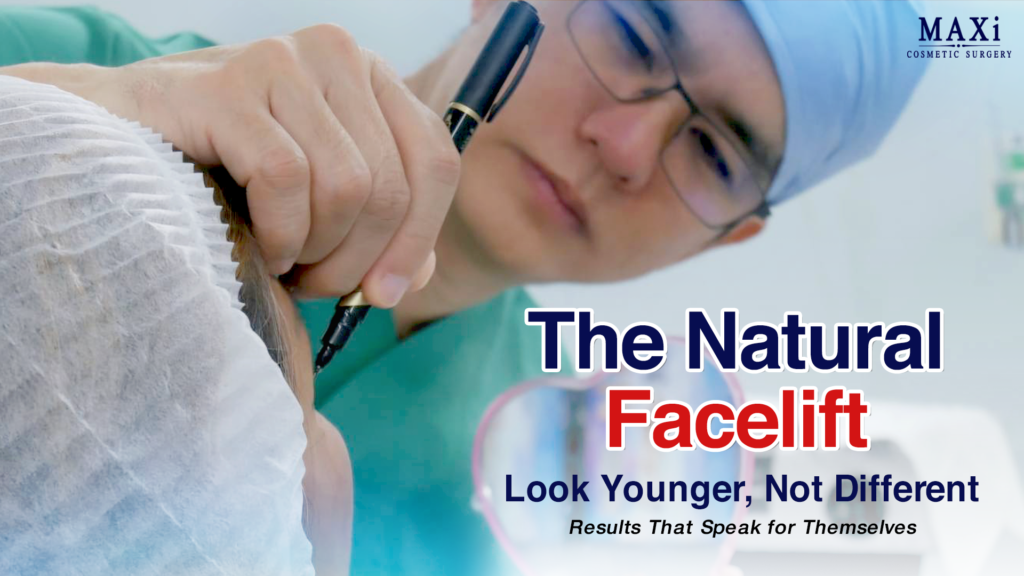
A Facelift Should Help You Look Like Yourself — Just More Refreshed
One of the most common concerns people have about facelift surgery is looking unnatural.
Many patients don’t want to look like they’ve had “work done.” They simply want to look less tired, more refreshed, and closer to how they used to look.
A natural-looking facelift should not make your face look overly tight or change the features that make you look like yourself. The goal is to address sagging skin and underlying tissues while maintaining your natural facial proportions and expressions.
The result should look subtle enough that people may simply notice that you look fresher or more rested, rather than immediately knowing you’ve had surgery.
So, what makes a facelift look natural? It starts with choosing the right surgical technique, understanding the deeper structures of the face, and creating a treatment plan based on each patient’s individual anatomy
1. Understanding Your Face Comes First
Before deciding on a facelift technique, the surgeon needs to carefully assess your face.
This includes looking at your facial structure, proportions, skin quality, and how the tissues have changed over time. Previous photographs can also be helpful, especially if they show how your face looked before noticeable signs of aging appeared.
These photos give the surgeon a better understanding of your natural facial features and proportions. They can be useful when planning how to reposition the tissues while keeping the result balanced and natural.
The goal is not to change the way you look. It is to address the changes that have happened over time while preserving the features that make you look like yourself
2. The Right Surgical Plane Matters
A facelift is not simply about pulling the skin tighter. The surgeon also needs to consider the deeper tissues that support the face.
The face has several layers, including the skin, fat, and a deeper layer of connective tissue and muscle known as the SMAS (Superficial Musculo-Aponeurotic System).
When a facelift focuses mainly on the skin, there is a limit to how much the skin can be tightened. Too much tension can make the result look tight or unnatural.
Depending on the patient’s anatomy and degree of facial laxity, a Deep Plane Facelift may be considered. This technique works beneath the SMAS layer to release and reposition certain deeper facial tissues. The skin can then be redraped over the repositioned tissues rather than being used to create the lift on its own.
The goal is to create a more balanced result by addressing the underlying changes in the face, while avoiding unnecessary tension on the skin
3. Not Every Part of the Face Needs the Same Approach
A facelift is not the same procedure for every patient. Each face has its own anatomy and shows different signs of aging, so the surgical approach should be tailored to the individual.
Some patients may have more noticeable jowling along the jawline, while others may be more concerned about loose skin around the neck. Some may also have changes in the cheek or temple area that need to be considered as part of the overall treatment plan.
This is why a facelift should be planned based on the patient’s facial structure and specific concerns, rather than using exactly the same technique for everyone.
At MAXi Clinic, the High SMAS technique may be used to reposition the deeper tissues in an upward direction, depending on the patient’s anatomy and treatment goals. The aim is to restore a more natural relationship between the cheeks, jawline, and neck without putting unnecessary tension on the skin.
The direction and amount of tissue repositioning are carefully planned for each patient. This helps create a result that is balanced with the patient’s existing facial proportions rather than making every facelift look the same
4. The Small Details Matter, Too
A facelift focuses mainly on sagging skin and underlying tissues, but other changes can also affect the overall appearance of the face.
As we age, some areas may lose volume. The cheeks can become flatter, the temples may become less full, and the area under the eyes can appear more hollow. These changes are not always addressed by a facelift alone.
For some patients, fat grafting may be considered as part of their treatment plan. The procedure uses the patient’s own fat, taken from another area of the body, to add volume to selected areas of the face. The amount and location of fat placement depend on the patient’s individual anatomy and goals.
There are also changes that affect the surface of the skin, such as fine lines, uneven texture, or pigmentation. These concerns may be addressed with laser or other skin treatments, either as part of a broader treatment plan or after the initial recovery from surgery.
The key is not to add treatments simply because they are available. Each procedure should have a specific purpose and be recommended based on what the individual patient actually needs.
5. The Right Technique Depends on the Patient
There is no single facelift technique that is right for everyone. The procedure should be chosen based on the patient’s facial structure, skin quality, degree of laxity, and individual concerns—not age alone.
For someone in their late thirties or early forties with mild signs of facial aging, a Mini Facelift may be an appropriate option. It can focus on specific areas of early laxity without performing a more extensive procedure than necessary.
For patients with more significant changes around the jawline, neck, or mid-face, a more comprehensive approach may be recommended. Depending on the patient’s anatomy and goals, techniques such as High SMAS or Deep Plane Facelift may be considered to address the deeper supporting tissues.
The important point is that the right technique is not determined by age alone. It should be based on what has actually changed in the face and what the patient wants to achieve.
That assessment begins during the consultation, where the surgeon can evaluate the face and discuss which approach is most appropriate
6. Preserving What Makes You Look Like You
A natural-looking facelift should preserve the features that make each person’s face unique.
The goal is not to change the basic shape of the face or make someone look like a different person. Important features such as the cheeks, jawline, and overall facial proportions should be considered when planning the procedure.
A well-planned facelift should aim to make you look more refreshed while maintaining your natural facial expressions and appearance. Ideally, people who know you may notice that you look better or more rested, without immediately being able to tell that you have had surgery.
This is why the focus should not be on making the face as tight as possible. The surgical plan should balance the amount of lifting with the patient’s natural anatomy and proportions.
At MAXi Clinic, the goal is to create a refreshed and natural-looking result while preserving the features that make each patient look like themselves
7. The Surgeon’s Experience Matters
The surgical technique is important, but so are the surgeon’s experience, judgement, and understanding of facial anatomy.
Facelift surgery requires careful planning and attention to detail. Every patient has different facial proportions, tissue quality, and patterns of aging, so the surgeon needs to adapt the procedure to the individual rather than following exactly the same approach for everyone.
Experience is also important when assessing what can realistically be achieved and deciding how much correction is appropriate. The goal is not simply to create a tighter face, but to achieve a result that is balanced with the patient’s existing features.
When choosing a surgeon for a facelift, it can be helpful to look at their experience with facelift procedures, before-and-after results across different patients, and their professional qualifications and board certification.
Most importantly, the consultation should give you a clear understanding of the proposed technique, what it is intended to address, and what kind of result you can realistically expect
8. Realistic Expectations Make for Satisfied Patients
A facelift can help turn back some of the visible signs of aging, but it cannot stop the natural aging process.
The results vary from person to person, depending on factors such as skin quality, facial structure, age, lifestyle, and the extent of aging. Many patients notice a meaningful improvement in facial laxity and overall appearance after healing, but the goal is not to make the face look decades younger or completely different.
Having realistic expectations is an important part of being satisfied with the result. A facelift can improve the areas affected by aging, but it cannot prevent the face from changing over time.
Ultimately, a good facelift should still look like you. The aim is to create a fresher, more rested appearance while maintaining your natural facial features
